 Save
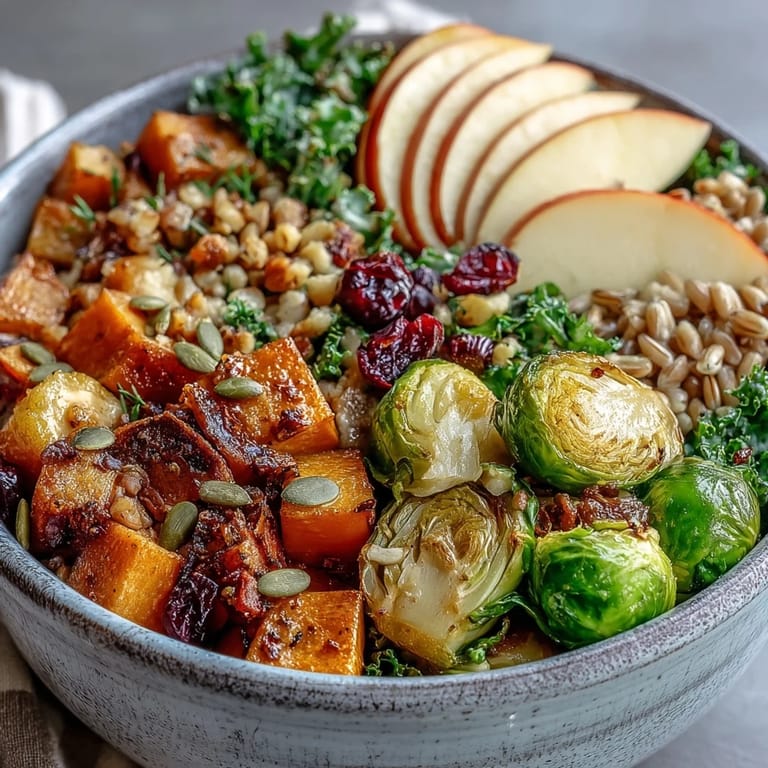
Save There's something about October afternoons that makes me crave bowls filled with warm, roasted vegetables. My neighbor brought over a basket of butternut squash one weekend, and instead of making the usual soup, I decided to build something you could actually hold in your hands. The combination of sweet roasted apples, crispy Brussels sprouts, and tender grains came together so naturally that it's become my go-to when I want something that feels both comforting and alive.
I made this for my book club last November, and halfway through the meal, someone asked if I'd added honey to the Brussels sprouts because they were so caramelized and sweet. That moment told me everything I needed to know about getting the oven temperature right and giving the vegetables enough space to breathe.
Ingredients
- Butternut squash, peeled and cubed (2 cups): The sweetness deepens when roasted at high heat, so don't skip the caramelization step or you'll lose that crucial contrast to the savory grains.
- Brussels sprouts, trimmed and halved (2 cups): Cut them all to the same size so they roast evenly; smaller ones can scorch while larger ones stay tender.
- Kale, stems removed and leaves chopped (2 cups): Massage it slightly before wilting if you want it less bitter, or skip that step if you love the mineral punch.
- Apple, cored and sliced (1 large): Use a firmer variety like Honeycrisp or Granny Smith so the slices hold their shape during roasting.
- Farro (1 cup): This grain soaks up the broth beautifully and has a chewy texture that grounds the bowl, though quinoa or brown rice work just as well.
- Vegetable broth or water (2 cups): Broth adds subtle flavor; water works fine if you prefer to let the vegetables shine without interference.
- Olive oil (3 tbsp): Good quality makes a difference here since the oil is a major flavor player, not just a cooking medium.
- Sea salt (1 tsp) and black pepper (1/2 tsp): Season in layers rather than all at once for depth.
- Smoked paprika (1/2 tsp): This carries the autumn theme and adds a subtle warmth that ties everything together.
- Ground cinnamon (1/2 tsp): Dust this on the apples just before roasting so it doesn't burn and turn bitter.
- Toasted pumpkin seeds (1/4 cup) and dried cranberries (2 tbsp): These toppings add texture and a burst of tartness that cuts through the richness.
Tired of Takeout? 🥡
Get 10 meals you can make faster than delivery arrives. Seriously.
One email. No spam. Unsubscribe anytime.
Instructions
- Fire up the oven and prep your pans:
- Set the oven to 425°F and line two baking sheets with parchment paper so nothing sticks and cleanup is a breeze. The parchment also helps the vegetables caramelize evenly by conducting heat consistently.
- Season the squash and Brussels sprouts:
- Toss the cubed squash and halved Brussels sprouts in a bowl with two tablespoons of olive oil, salt, pepper, and smoked paprika until everything is coated evenly. Spread them on one baking sheet in a single layer, which ensures each piece gets direct heat and roasts rather than steams.
- Prepare the apples separately:
- Place apple slices on the second baking sheet, drizzle with the remaining tablespoon of oil, and sprinkle with cinnamon. Keeping them separate means you can pull them out when they're just caramelized, before they turn to mush.
- Roast everything to golden perfection:
- Put both sheets in the oven; the squash and Brussels sprouts need 25 to 30 minutes with one stir halfway through, while the apples only need 15 minutes. You'll know it's done when the Brussels sprouts have charred edges and the squash is fork-tender.
- Cook the grains while everything roasts:
- Rinse the farro in a fine mesh strainer, then bring the vegetable broth to a boil in a saucepan. Add the farro, lower the heat, cover, and let it simmer for 20 to 25 minutes until tender and chewy; the timing varies slightly by brand, so check the package.
- Wilt the kale quickly:
- Heat a skillet over medium heat and add the chopped kale with a splash of water, stirring for just two to three minutes until it softens but still holds some personality. Don't overdo it or the kale becomes mushy and dull.
- Bring it all together:
- Divide the cooked grains into four bowls, then arrange the roasted vegetables and sautéed kale on top of each portion. The warm grains will sit underneath like a foundation, catching all the delicious juices from the vegetables.
- Crown it with toppings:
- Scatter pumpkin seeds, dried cranberries, and a crumble of feta or vegan cheese across the top of each bowl. Serve while everything is still warm so the textures stay distinct and the flavors pop.
 Save
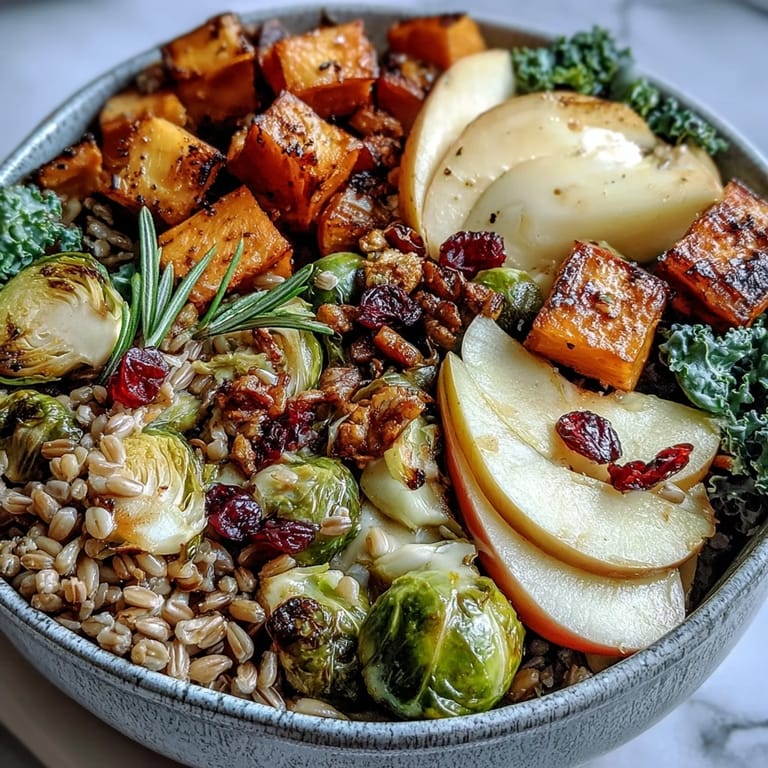
Save My son, who normally picks vegetables off his plate, asked for seconds of this bowl on his first try. That's when I realized it wasn't about hiding vegetables or sneaking them in; it was about roasting them so well that they became impossible to resist.
Why Roasting Changes Everything
Roasting at high heat transforms ordinary vegetables into caramelized versions of themselves, with edges that turn crispy and interiors that concentrate their natural sugars. It's the difference between eating your vegetables and actually looking forward to them. The Brussels sprouts become little crispy treasures, the squash gets almost creamy in the center, and the apples turn jammy without any added sweetness.
Building Bowls That Actually Taste Like Dinner
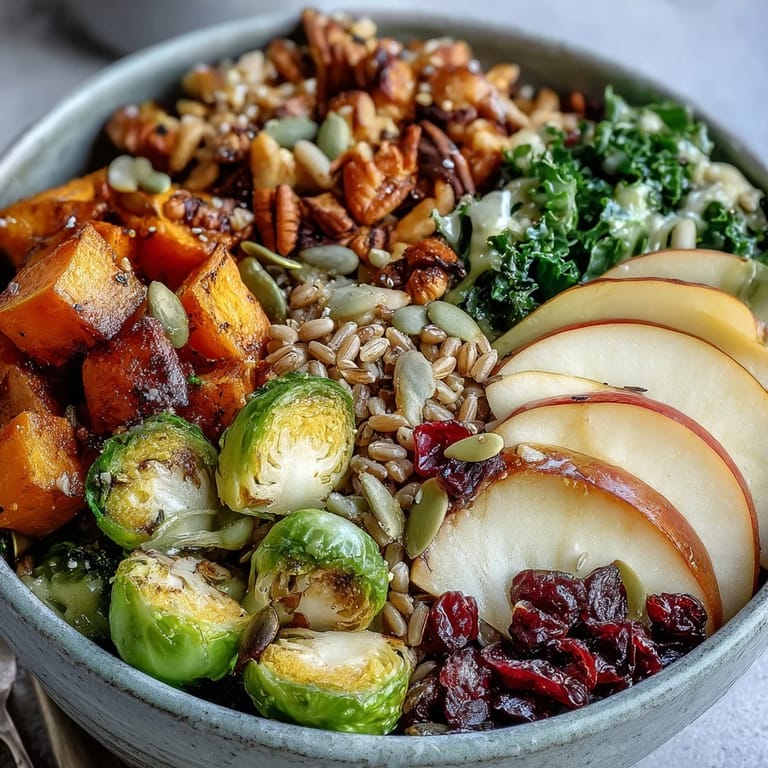
A bowl is only as good as its balance, and this one plays with contrasts to keep you interested from first bite to last. The chewy grains anchor everything, the roasted vegetables provide warmth and earthiness, the fresh kale adds a green note, the fruit brings brightness, and the seeds and cranberries deliver texture and tang. Each component has a job, and together they create something that feels whole and satisfying without being heavy.
Make It Your Own
The beauty of this bowl is how adaptable it is to what's in your kitchen or what you're craving that particular week. Swap the grains for whatever you have on hand, experiment with different roasted vegetables as the seasons change, or add protein like roasted chickpeas or crumbled tofu if you want something more substantial. This is a template that invites you to play.
- Pears work beautifully in place of apples if you want something a touch softer and more delicate.
- Roasted chickpeas tossed in smoked paprika add protein and crunch if you want to make this more of a complete meal.
- Try a drizzle of tahini or balsamic vinegar over the top just before eating for an extra layer of flavor.
 Save
Save This bowl has become my answer to the question, "What should I make tonight that feels like fall without tying me to the stove for hours?" Come November, I'm already planning next year's version.
Recipe FAQs
- → What grains work best in this bowl?
Farro provides a chewy, nutty foundation that complements the roasted vegetables beautifully. Quinoa offers a lighter, protein-rich alternative and makes the dish gluten-free. Brown rice adds familiar texture and cooks reliably. Any hearty grain will absorb the flavors while maintaining its structure beneath the colorful toppings.
- → Can I prepare this bowl in advance?
The components store exceptionally well for meal prep. Roast the vegetables and cook the grains up to 4 days ahead, keeping them in separate containers. Reheat gently before assembling, or enjoy the bowl at room temperature. The flavors actually develop and meld after resting overnight, making leftovers even more delicious the next day.
- → How do I make this bowl more protein-rich?
Add roasted chickpeas tossed with the same smoked paprika seasoning, or incorporate cubed tofu during the last 15 minutes of roasting. Shredded chicken, white beans, or a poached egg also complement the autumn flavors. For plant-based options, hemp seeds or chopped walnuts provide additional protein while adding pleasant crunch.
- → What apple varieties work best?
Honeycrisp or Fuji apples hold their shape well during roasting while becoming tender and sweet. Gala offers a milder flavor that won't overpower the vegetables. For a tart contrast, try Granny Smith apples. The roasting process concentrates the natural sugars, creating caramelized edges that enhance the overall sweetness of the bowl.
- → Can I use other seasonal vegetables?
Sweet potato, parsnips, or turnips can replace or complement the butternut squash. Roasted beets add vibrant color and earthy sweetness. Delicata squash requires no peeling and roasts beautifully. For greens, Swiss chard or spinach can substitute for kale, though their cooking times may vary slightly based on thickness.
- → What dressing pairs well with these flavors?
A simple apple cider vinaigrette ties the components together beautifully. Whisk together apple cider vinegar, olive oil, Dijon mustard, and a touch of maple syrup. Tahini dressing with lemon adds creaminess, while a balsamic glaze provides concentrated sweetness that complements the roasted vegetables perfectly.