 Save
Save My friend Maya showed up one Tuesday with leftover roasted vegetables and a can of chickpeas, insisting we turn them into something more interesting than sad desk lunch. We threw together whatever grains were hiding in her pantry, whisked up a tahini dressing from memory, and twenty minutes later we were both surprised at how genuinely delicious and filling it tasted. That bowl became our go-to answer whenever someone asked what we'd been eating lately, and it dawned on me that the best meals often come together from whatever needs using up rather than a carefully planned menu.
I made this for a potluck once when I was running late and only had twenty minutes to prep, so I threw caution aside and roasted everything at a higher temperature. Someone asked for the recipe before they'd even finished eating, and I realized that rushing sometimes leads to better caramelization on the vegetables anyway. Now whenever I make it, I think about how constraints can actually spark creativity in the kitchen.
Ingredients
- Quinoa, brown rice, or farro (1 cup): Pick whichever grain you have or love most—quinoa is fastest and naturally complete protein, rice is comforting and forgiving, farro has real chew and nutty flavor.
- Water or vegetable broth (2 cups): Broth adds depth, but water works just fine if that's what you have.
- Salt (1/2 tsp for grains): Gets whisked into the cooking liquid so every grain tastes seasoned from the inside out.
- Cooked chickpeas (1 cup): Canned and drained works perfectly, or cook dried ones ahead if you want to feel extra accomplished.
- Cooked lentils—green or brown (1 cup): They hold their shape through roasting and add earthiness that makes the whole bowl feel grounded.
- Red bell pepper, zucchini, red onion, cherry tomatoes, broccoli florets: These are the foundation, but think of them as suggestions—swap in whatever seasonal vegetables make you excited to open your crisper.
- Olive oil (2 tbsp): Coats the vegetables so they roast instead of steam, building those caramelized edges.
- Smoked paprika and ground cumin (1 tsp and 1/2 tsp): These spices wake up the vegetables without overpowering them, adding warmth instead of heat.
- Fresh parsley (1/4 cup chopped): The brightness at the end that makes everything taste fresher than it is.
- Avocado and toasted pumpkin seeds: Creamy and crunchy final touches that make each spoonful interesting.
- Tahini (2 tbsp): Creates a dressing that's rich enough to feel luxurious but stays light when thinned with lemon and water.
- Lemon juice (1 tbsp): Cuts through the tahini's richness and ties all the flavors together.
- Garlic clove (1 small, minced): Just enough to add a whisper of sharpness to the dressing without announcing itself.
Tired of Takeout? 🥡
Get 10 meals you can make faster than delivery arrives. Seriously.
One email. No spam. Unsubscribe anytime.
Instructions
- Heat your oven and get the grains started:
- Crank the oven to 425°F while you bring water or broth to a boil in a saucepan with salt. Add your chosen grain, cover, and let it simmer low and slow until tender—the timing depends on what you picked, so check the package if you're unsure.
- Prep and season your vegetables:
- While the grains cook, dice your bell pepper and onion, slice the zucchini, halve those cherry tomatoes, and break broccoli into florets. Toss everything in a big bowl with olive oil, smoked paprika, cumin, salt, and pepper until each piece glistens with oil and spice.
- Get vegetables roasting with intention:
- Spread the dressed vegetables in a single layer on a baking sheet—don't crowd them or they'll steam instead of roast. Slide into the oven and let them sit for about ten minutes before stirring, then give them another ten to fifteen minutes until the edges char and the insides soften.
- Warm the legumes gently:
- While vegetables roast, heat your chickpeas and lentils in a small pan with a splash of olive oil and a pinch of salt if you want them to taste fresher than straight from the can. A couple minutes is all they need.
- Whisk together the tahini dressing:
- Combine tahini, lemon juice, minced garlic, salt, and pepper in a bowl, then whisk in water a splash at a time until the dressing reaches a consistency you can drizzle. Taste and adjust—more lemon if it needs brightness, more water if it's too thick.
- Build your bowls with intention:
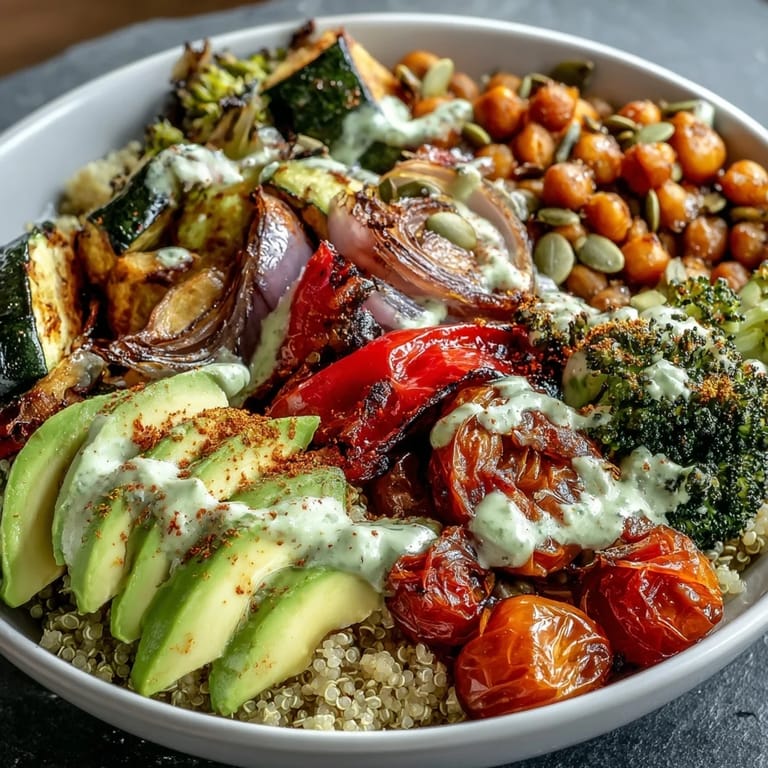
- Divide the fluffy grains among four bowls as your base, then top each with a portion of roasted vegetables and the warmed legumes. Drizzle the tahini dressing over everything so it pools slightly in the grain.
- Finish with color and crunch:
- Scatter fresh parsley over each bowl, arrange avocado slices, sprinkle pumpkin seeds for texture, and serve with lemon wedges so each person can squeeze more brightness in if they want.
 Save
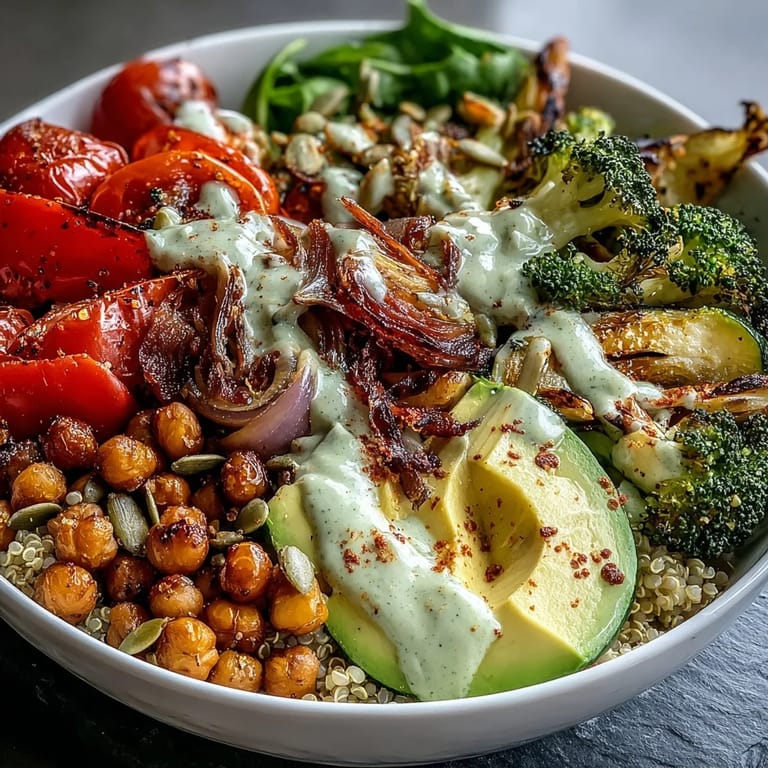
Save There's something about assembling a bowl like this that feels more nourishing than the sum of its parts—you're literally creating a plate with every color of the vegetable rainbow, enough plant protein to feel grounded, and a dressing that makes it all sing together. It became my answer to both vegetarian guests and people who just want to eat lighter without sacrificing flavor or satisfaction.
Why Seasonal Vegetables Matter Here
Summer means cherry tomatoes at peak sweetness and zucchini that's tender and mild, while fall asks for roasted cauliflower and sweet potato that caramelize into something almost candy-like. Winter is your moment for Brussels sprouts and root vegetables, spring brings asparagus and fresh herbs that make everything brighter. Building this bowl around what's actually in season means you're not fighting agriculture, you're flowing with it, and the vegetables will taste more like themselves.
The Tahini Dressing Game Changer
This dressing started as a last-minute idea borrowed from a Mediterranean cookbook, and it's become the element that transforms individual ingredients into something cohesive. The tahini creates richness, the lemon juice adds brightness, the garlic whispers in the background, and together they make even plain roasted broccoli taste like you were thinking carefully about flavor. Once you master this ratio, you'll find yourself drizzling it on salads, grain bowls, roasted vegetables, and anywhere else that needs a creamy, plant-based sauce.
Building Flexibility Into Your Bowl
The beautiful part about this recipe is that it's genuinely flexible without becoming a mess. You can swap brown rice for farro, use black lentils instead of green, trade broccoli for cauliflower, add crispy tofu if you want extra protein, or skip the avocado if you're budget-conscious. The structure holds up no matter what you swap, as long as you keep a grain, a legume, roasted vegetables, and the tahini dressing as your anchor points.
- Keep the tahini dressing consistent because it's the unifying element that makes everything taste intentional.
- If you're adding cheese or any non-vegan elements, do it sparingly so the vegetables stay the star.
- Make extra dressing and keep it in a jar in the fridge—it tastes good on almost anything for the next few days.
 Save
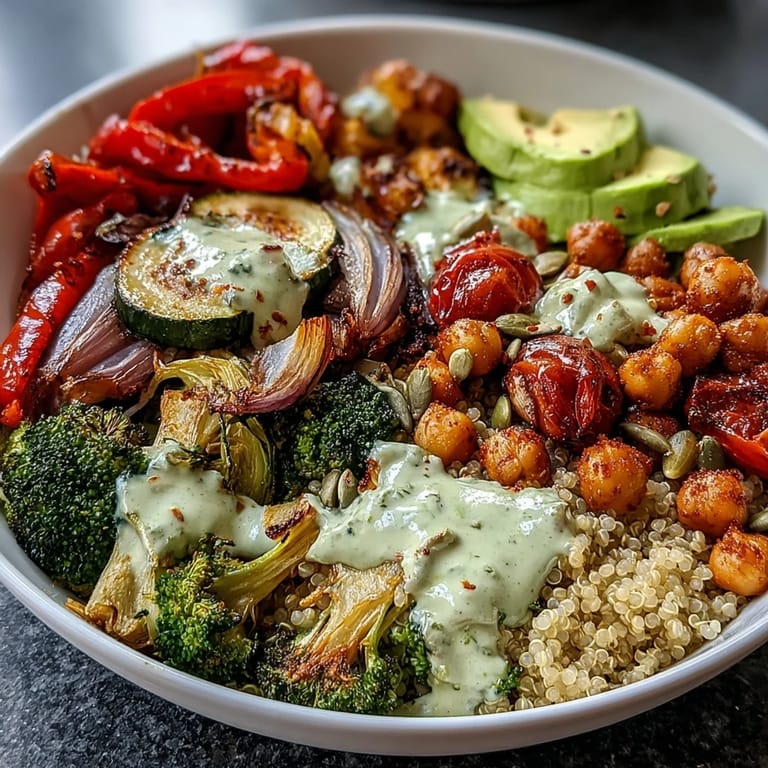
Save This bowl became my answer to so many moments—rushed weeknight dinners, potlucks where I wasn't sure what anyone ate, meal prep Sundays when I wanted something that wouldn't bore me by Wednesday. It's nourishing without feeling restrictive, colorful without being precious, and satisfying enough that you don't feel like you're eating salad.
Recipe FAQs
- → Can I make this bowl ahead of time?
Yes, this bowl meal preps beautifully. Cook the grains and roast vegetables up to 4 days in advance. Store components separately in airtight containers and assemble when ready to serve. The tahini dressing can be made ahead and stored in the refrigerator for up to a week.
- → What other vegetables work well in this bowl?
Sweet potato, cauliflower, carrots, Brussels sprouts, and eggplant all roast beautifully alongside the vegetables listed. Use whatever seasonal produce you have available. Root vegetables may need a few extra minutes in the oven.
- → Can I use different legumes?
Absolutely. Black beans, kidney beans, white beans, or roasted edamame all work wonderfully. You can also use a single type of legume instead of mixing chickpeas and lentiles. Canned beans are perfectly fine—just rinse and drain well before using.
- → Is this bowl gluten-free?
It can be. Use quinoa or certified gluten-free grains as your base. Avoid farro and barley unless using certified gluten-free versions. Always check labels on packaged ingredients to ensure they're produced in a gluten-free facility if cross-contamination is a concern.
- → How can I add more protein?
Add hemp seeds, chia seeds, or chopped walnuts for plant-based protein boosts. A soft-boiled or poached egg also pairs beautifully. For non-vegan options, crumbled feta or goat cheese adds both protein and tangy flavor.
- → What can I substitute for tahini?
Cashew butter, almond butter, or sunflower seed butter all work as alternatives to tahini. You can also make a simple lemon-olive oil vinaigrette or use your favorite store-bought dressing if tahini isn't available.