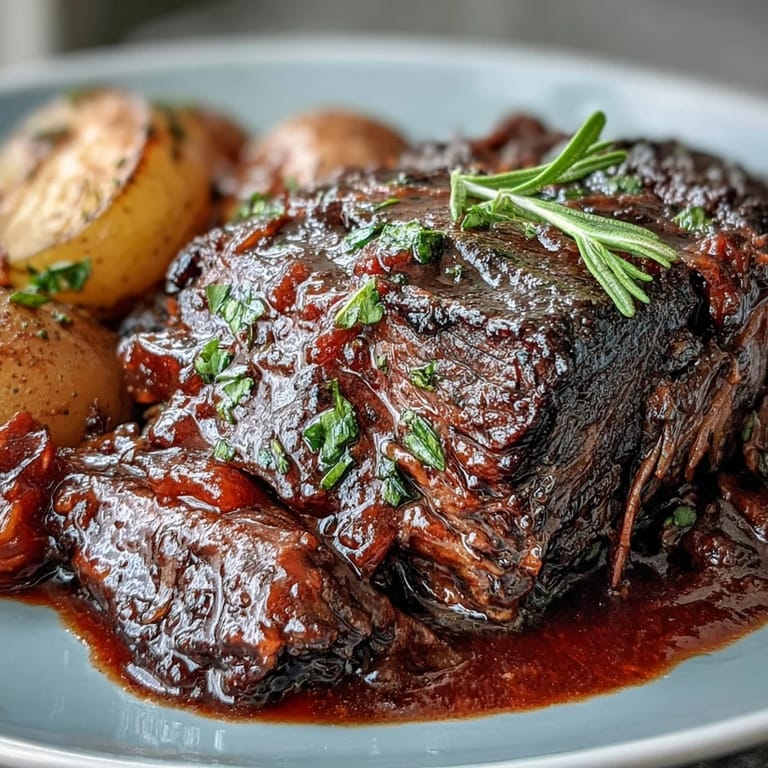
 Save
Save The smell of beef searing in butter is one of those kitchen sounds that stops everyone mid-conversation. I learned to make pot roast on a Sunday when I had too much time and not enough plan, just a heavy pot and a hunk of chuck that had been sitting in the fridge. What started as an experiment turned into the kind of meal that fills the house with warmth long before anyone sits down to eat. Now it's the dish I make when I want the kitchen to do the talking.
I made this for a neighbor once who had just moved in and didnt know anyone yet. She showed up the next morning with the empty pot, washed and dried, and asked if I could write the recipe down. We ended up sitting at her kitchen table for an hour talking about how food has a way of making a new place feel like home. She still makes it every winter, and every winter she texts me a picture of her Dutch oven on the stove.
Ingredients
- Beef chuck roast: This cut has enough marbling to stay juicy through long cooking, and it shreds beautifully without drying out.
- Kosher salt and black pepper: Season generously before searing so the crust develops deep flavor that carries through the whole dish.
- All-purpose flour: A light dusting helps the sear stick and later thickens the braising liquid into something silky.
- Olive oil and butter: The combination gives you a high smoke point and rich flavor, which makes all the difference when browning.
- Yellow onion: Thick wedges hold their shape and turn sweet and soft as they braise, adding a backbone of flavor to the sauce.
- Garlic: Smashing the cloves releases their oils quickly and they melt into the liquid, disappearing but leaving their mark.
- Carrots, celery, and baby potatoes: These classic vegetables soak up the braising liquid and become tender without falling apart if you add them halfway through.
- Tomato paste: Cooking it until it darkens removes the raw edge and adds a deep, slightly sweet richness to the gravy.
- Red wine: It deglazes the pot and adds acidity that balances the richness of the beef, but broth works if you prefer to skip it.
- Beef broth: Low-sodium gives you control over the seasoning, and it becomes the base of a gravy worth soaking up with bread.
- Worcestershire sauce: Just a splash adds umami and a subtle tang that rounds out the flavors without announcing itself.
- Rosemary, thyme, and bay leaves: Fresh herbs are best, but dried work fine and they perfume the whole pot as it simmers.
- Cornstarch slurry: This is optional, but it turns the braising liquid into a proper gravy if you like it thick enough to coat a spoon.
Tired of Takeout? 🥡
Get 10 meals you can make faster than delivery arrives. Seriously.
One email. No spam. Unsubscribe anytime.
Instructions
- Preheat and prep the beef:
- Set your oven to 300°F if youre using it. Pat the roast completely dry with paper towels so it sears instead of steams, then season it all over with salt and pepper and dust it lightly with flour.
- Sear the roast:
- Heat the oil and butter in your heaviest pot over medium-high heat until shimmering. Lay the roast in carefully and let it sit undisturbed for 4 to 5 minutes per side until a dark crust forms, then brown the edges too before transferring it to a plate.
- Cook the aromatics:
- Lower the heat to medium and add the onion wedges, letting them soften and pick up color for 3 to 4 minutes. Toss in the garlic and stir for about a minute until it smells sweet and sharp.
- Build the braising base:
- Stir in the tomato paste and let it cook for a minute or two until it darkens and sticks to the bottom a little. Pour in the red wine and scrape up all the browned bits, letting it bubble and reduce slightly for 2 to 3 minutes.
- Add the liquid and herbs:
- Pour in the beef broth and Worcestershire sauce, then drop in the rosemary, thyme, and bay leaves. Nestle the roast back into the pot so the liquid comes about halfway up the sides.
- Braise low and slow:
- Bring everything to a gentle simmer, then cover tightly and either reduce the heat to low on the stovetop or slide the whole pot into the oven. Let it cook undisturbed for 1 and a half hours.
- Add the vegetables:
- Flip the roast over carefully and tuck the carrots, celery, and potatoes around it, pushing them down into the liquid. Cover again and cook for another 1 and a half to 2 hours until the beef pulls apart easily and the vegetables are tender.
- Rest and finish the gravy:
- Move the roast and vegetables to a platter and tent it with foil. Skim the fat off the top of the liquid, then bring it to a simmer and stir in the cornstarch slurry if you want it thicker, cooking for 2 to 3 minutes until glossy.
- Serve:
- Pull the beef into big chunks or slice it against the grain. Arrange it with the vegetables and spoon the gravy over everything, finishing with a handful of chopped parsley if you have it.
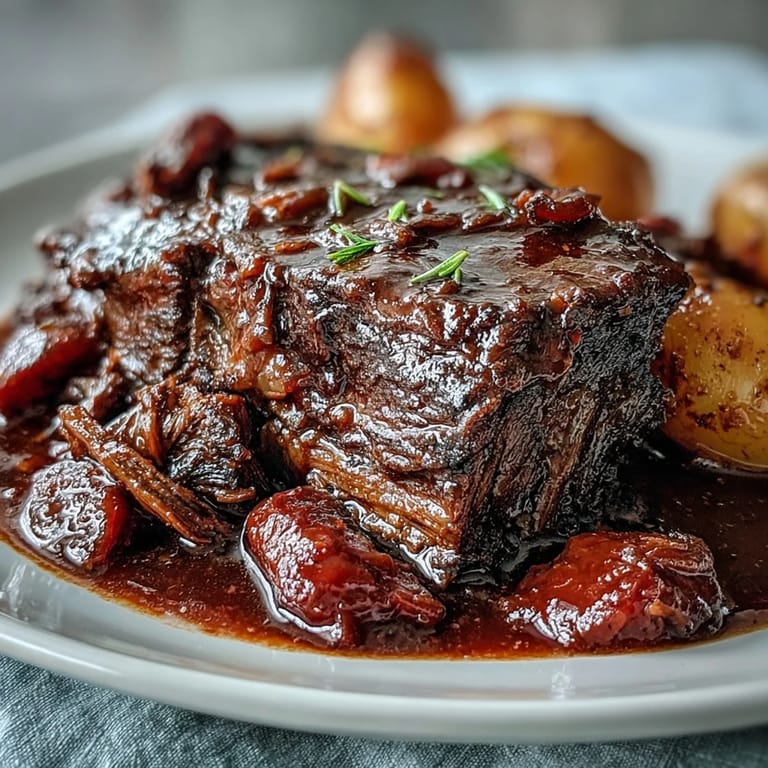 Save
Save There was a winter evening when the power went out halfway through cooking this, and I moved the whole pot to the woodstove in the basement. It took an extra hour and the gravy was thicker than usual, but everyone still talks about that meal like it was the best thing Id ever made. Sometimes the imperfect moments are the ones that stick.
Choosing Your Cut
Chuck roast is the go-to because its marbled enough to stay tender through long cooking, but blade roast works just as well if thats what you find. Look for a piece with visible white streaks of fat running through it, not just a thick cap on the outside. If the roast is tied with string, leave it on during cooking so it holds its shape, then snip it off before serving.
Making It Ahead
Pot roast is one of those rare dishes that gets better after a night in the fridge, so feel free to make it a day early. Let it cool completely before covering and refrigerating, then skim off the solidified fat from the top before reheating gently on the stove. The flavors deepen and the gravy thickens on its own, which means less work and more reward.
Leftover Magic
The day after is when pot roast really earns its keep. Shred any remaining beef and pile it onto crusty rolls with a little gravy for sandwiches that taste like comfort in your hands. You can also toss it with the vegetables and gravy over egg noodles, rice, or polenta, or fold it into soft tortillas with a squeeze of lime for tacos that no one will see coming.
- Reheat gently with a splash of broth to keep everything moist.
- Freeze portions in the gravy for up to three months and thaw overnight in the fridge.
- Use leftover gravy as a base for beef and vegetable soup by adding more broth and fresh herbs.
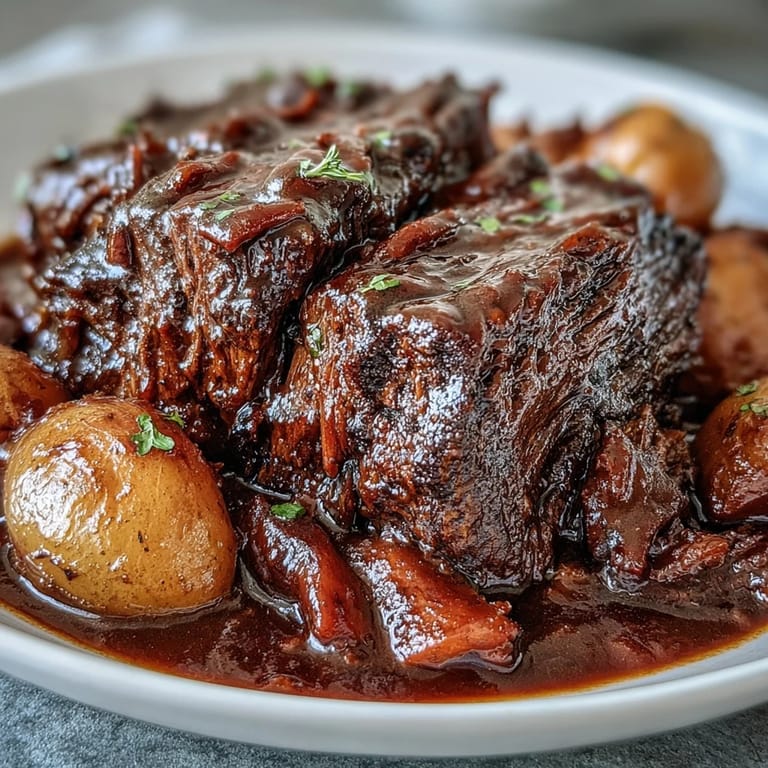 Save
Save This is the kind of meal that makes a Sunday feel slower and a Monday easier. Once you make it, youll understand why it never goes out of style.
Recipe FAQs
- → What cut of beef works best for pot roast?
Chuck roast or blade roast are ideal choices because they have generous marbling and connective tissue that breaks down during long cooking. This results in incredibly tender, succulent meat. Look for a well-marbled 3-3.5 lb roast for the best flavor and texture.
- → Can I make this in a slow cooker?
Absolutely. After searing the beef and sautéing the aromatics, transfer everything to your slow cooker. Cook on low for 8-10 hours or high for 5-6 hours. Add vegetables during the last 2-3 hours on low or 1-2 hours on high to prevent them from becoming too soft.
- → What can I substitute for red wine?
Replace the red wine with additional beef broth for a non-alcoholic version. The dish will still be delicious, though you'll miss some depth. Balsamic vinegar or grape juice can add a touch of acidity and sweetness to mimic wine's complexity.
- → How do I know when the pot roast is done?
The beef is ready when it shreds easily with a fork and offers no resistance. This typically takes 3-4 hours of braising. The vegetables should be tender but not falling apart. A fork inserted into the thickest part of the roast should slide in and out effortlessly.
- → Can I prepare this ahead of time?
Yes, pot roast actually improves overnight. Make it up to 2 days ahead, cool completely, and refrigerate. The fat will solidify on top for easy removal. Reheat gently on the stove, adding a splash of broth if needed. The flavors will have melded beautifully, making leftovers even better than the first day.
- → What sides pair well with beef pot roast?
Crusty bread is perfect for soaking up the rich gravy. Buttered egg noodles, creamy mashed potatoes, or soft polenta also complement the dish beautifully. A simple green salad with vinaigrette balances the richness, while roasted root vegetables echo the flavors in the braise.