 Save
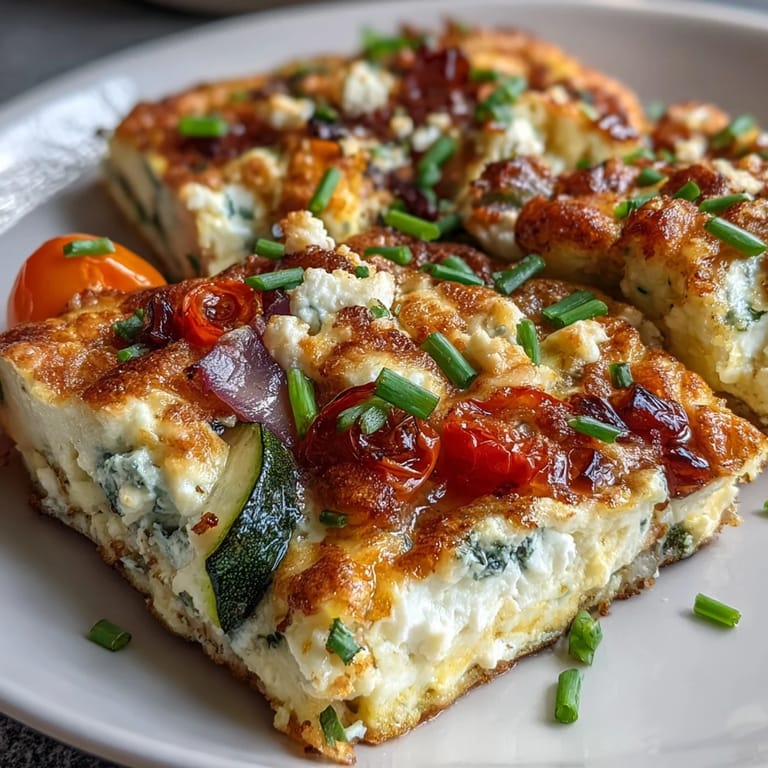
Save My mornings got noticeably easier the week I figured out sheet pan eggs. I was standing in my kitchen on a Tuesday, staring at a carton of eggs and wondering why I kept defaulting to scrambled every single time, when it hit me—what if I just threw everything into one pan and let the oven do the heavy lifting? That first batch came out of the oven puffy and golden, and suddenly I had six breakfasts ready to go. It's become my secret weapon for staying on track without the daily cooking performance.
I brought a tray of these to a friend's place last spring when she was going through a hectic stretch at work, and watching her face light up when she realized she could grab a warm square before heading out felt like a small victory. She started making them herself after that, texting me photos of her veggie variations. It's funny how a breakfast casserole became a way we stayed connected when life got chaotic.
Ingredients
- Eggs: Ten large ones create the structure and protein backbone—room temperature eggs whisk into a fluffier mixture than cold ones straight from the fridge.
- Low-fat cottage cheese: This is the secret that makes the texture almost custardy; the curds create little pockets that keep everything tender and impossibly moist.
- Milk: Use whatever you keep on hand, dairy or plant-based, to thin the mixture just enough so it spreads evenly and bakes through gently.
- Cherry tomatoes: Halve them so they don't roll around and distribute unevenly; their slight sweetness balances the savory herbs beautifully.
- Baby spinach: Chop it roughly before adding so it nestles throughout the eggs rather than clumping in one corner of the pan.
- Red bell pepper: Dice this small enough to cook through in 25 minutes; larger pieces stay too firm and don't integrate as naturally.
- Zucchini: Cut into small dice so it softens and melds into the egg mixture rather than staying vegetable-distinct.
- Red onion: Mincing it fine prevents sharp raw bites and lets the flavor dissolve into the whole dish.
- Salt, pepper, and dried oregano: These season the entire mixture as it bakes, so taste as you go if you want to adjust.
- Fresh chives or parsley: Add these only after baking so they stay bright and don't turn dark or bitter from the heat.
Tired of Takeout? 🥡
Get 10 meals you can make faster than delivery arrives. Seriously.
One email. No spam. Unsubscribe anytime.
Instructions
- Set up your pan:
- Preheat your oven to 375°F and grease a 13x9 inch baking sheet with nonstick spray or parchment paper. The sheet pan size matters here because it gives you the right thickness—too small and your eggs stack too high and bake unevenly.
- Make your egg base:
- Whisk together the eggs, cottage cheese, and milk in a large bowl until the mixture looks smooth and slightly frothy on top. This whisking step is important because it breaks down the cottage cheese curds and incorporates air that makes everything lighter.
- Season and layer:
- Stir in your salt, pepper, and dried herbs, then gently fold in all your chopped vegetables. Keep the stirring gentle here so you don't deflate the whisked eggs.
- Spread and settle:
- Pour the whole mixture onto your prepared sheet and give the pan a gentle tap or two on the counter so it spreads evenly and any air bubbles rise to the top. You'll see it settle into an even layer.
- Bake until just set:
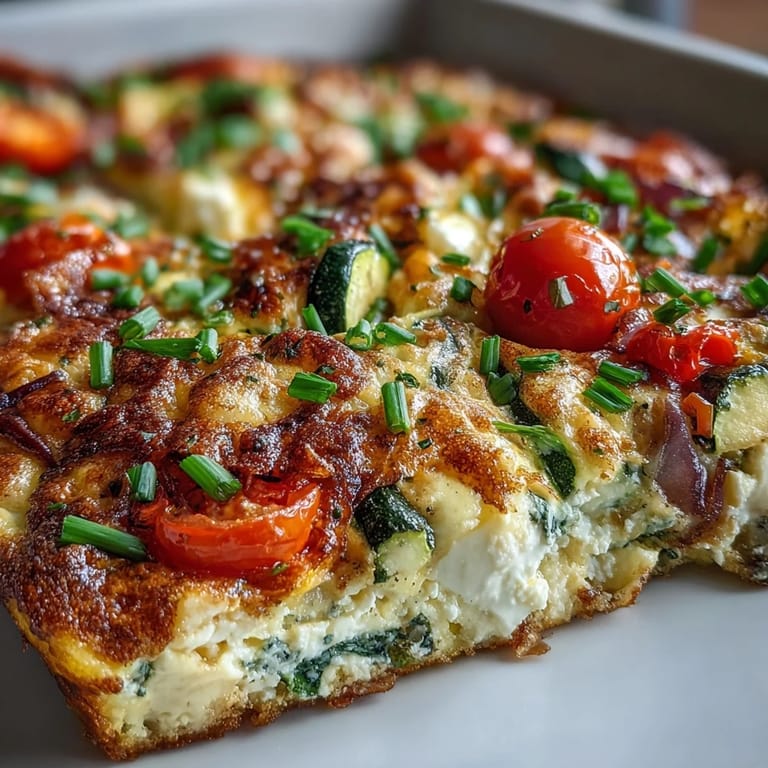
- Slide into the oven for 22 to 25 minutes until the center looks barely set and the edges show light golden color. The eggs continue cooking slightly after they come out, so don't overbake or they'll dry out.
- Cool and serve:
- Let the pan rest for 5 minutes outside the oven, then slice into squares. The cooling time helps it hold together as you cut, and you can serve it warm or even room temperature.
 Save
Save There was something almost magical the first time my partner grabbed one of these cold straight from the fridge on his way out the door, ate it standing at the kitchen counter, and just said, "This is actually good." It became less about meal prep and more about the fact that we finally had something nutritious that required zero willpower or convincing.
Vegetable Swaps and Creativity
The beauty of this recipe is that it adapts to whatever vegetables you have around. Mushrooms work wonderfully, especially if you sauté them first to remove excess moisture, and broccoli florets become tender and sweet as they bake. I've thrown in asparagus spears, halved Brussels sprouts, diced carrots, even sun-dried tomatoes when I'm feeling fancy. The only thing to remember is that watery vegetables like fresh tomatoes are fine raw, but harder vegetables benefit from a quick dice so they cook through in the 25-minute window.
Storage and Meal Prep Strategy
These slices keep beautifully in an airtight container for up to four days, which makes them perfect for genuinely easy mornings. I usually wrap individual squares in parchment paper before stacking them in the fridge so they're grab-and-go ready, and a minute in the microwave brings them back to that perfect warm state. You can also freeze them for up to a month if you want to stash a batch away—just thaw in the fridge overnight and reheat gently.
Flavor Upgrades and Personal Touches
Once you nail the basic technique, the flavor variations are endless. Shredded cheddar or feta sprinkled on top before baking adds richness, a pinch of smoked paprika brings subtle depth, and fresh dill or basil swirled through takes it in a completely different direction. I've even added crumbled turkey sausage or crispy bacon bits for extra protein when I'm being indulgent, though the cottage cheese already makes these incredibly filling.
- Fresh herbs mixed into the batter itself hold their flavor better than those scattered on top afterward.
- If you like heat, a small pinch of chili flakes stirred in during the seasoning step spreads the spice evenly throughout every bite.
- Letting the baked eggs cool to room temperature actually intensifies the flavors, so don't rush to eat them while they're piping hot if you want full taste impact.
 Save
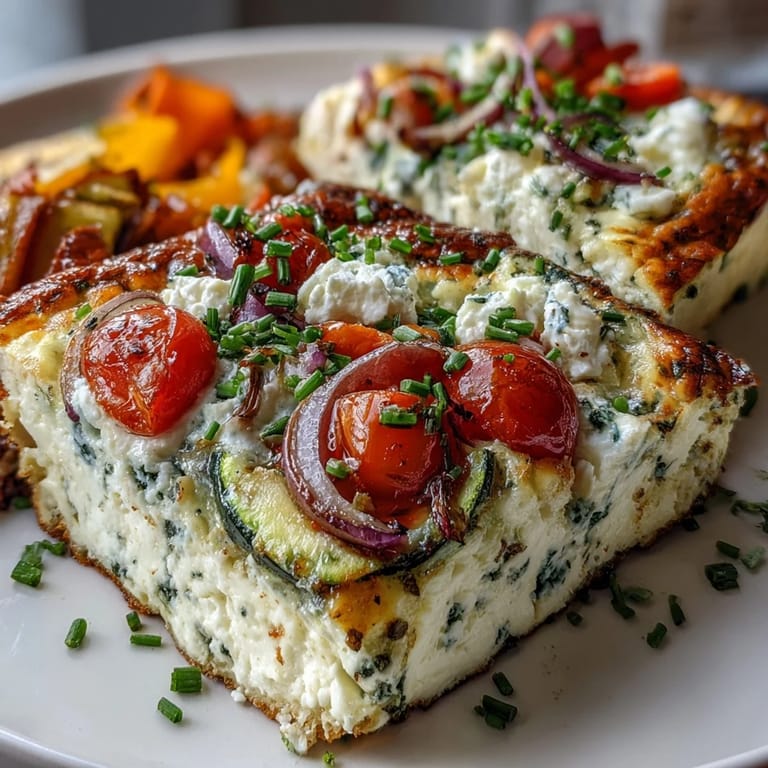
Save This sheet pan has become my answer to that 6 a.m. moment when you're already running late and still haven't eaten. It's proof that healthy eating doesn't require a lot of fuss.
Recipe FAQs
- → Can I freeze these sheet pan eggs?
Yes, these freeze exceptionally well. After baking and cooling, cut into squares and wrap individually in plastic wrap, then place in a freezer-safe bag. They'll keep for up to 3 months. Thaw overnight in the refrigerator and reheat in the microwave.
- → Why use cottage cheese in baked eggs?
Cottage cheese adds moisture and creaminess without making the eggs heavy. It melts into the egg mixture, creating a fluffy texture and boosting the protein content significantly. The small curds practically disappear during baking, leaving just rich, creamy goodness behind.
- → What vegetables work best in this dish?
Cherry tomatoes, spinach, bell peppers, zucchini, and red onion are excellent choices because they hold up well during baking and release moisture gradually. Avoid watery vegetables like cucumbers. Mushrooms, broccoli florets, asparagus pieces, or diced sweet potatoes also work beautifully.
- → How do I know when the eggs are done?
The eggs are ready when the center is just set—no longer jiggly—and the edges are lightly golden. A toothpick inserted in the center should come out clean. Keep in mind the eggs will continue cooking slightly as they rest, so remove them from the oven when they still look slightly underdone in the very center.
- → Can I make this dairy-free?
You can substitute the cottage cheese with an equal amount of silken tofu blended until smooth, or use dairy-free cream cheese. Plant-based milk works perfectly in place of dairy milk. The texture will be slightly different but still delicious and protein-rich.
- → What size pan should I use?
A 13x9 inch rimmed baking sheet (33x23 cm) creates the ideal thickness—about 1 inch thick when baked. Using a larger pan will make the eggs too thin and they may overcook, while a smaller pan will make them too thick and dense in the center.